Price Wars: How Smart Comparison Slashes 3PL Costs 60%

In today's hyper-competitive e-commerce landscape, the difference between profitability and bankruptcy often comes down to one critical factor: logistics costs. As businesses struggle with razor-thin margins, understanding how to leverage price comparison strategies for third-party logistics (3PL) services has become not just advantageous—it's absolutely essential for survival.
The global 3PL market, valued at over $1 trillion annually, presents both tremendous opportunities and significant challenges for businesses of all sizes. With thousands of providers claiming to offer the best rates, how can companies cut through the noise and identify genuinely low-cost solutions without sacrificing quality? The answer lies in strategic price comparison combined with smart operational decisions.
The Hidden Costs Killing Your Bottom Line
Before diving into comparison strategies, it's crucial to understand what you're actually comparing. Many businesses make the fatal mistake of focusing solely on headline rates while ignoring the total cost of ownership when selecting a 3PL provider.
Beyond the Base Rate: What Really Matters
When evaluating 3PL pricing, consider these often-overlooked cost factors:
- Storage fees – including receiving, put-away, and inventory management
- Pick and pack charges – which can vary dramatically based on order complexity
- Shipping markups – some providers add hidden margins to carrier rates
- Technology fees – integration costs, API access, and reporting tools
- Minimum commitments – monthly minimums that can devastate seasonal businesses
- Inbound freight handling – receiving pallets isn't always included
- Special handling fees – for oversized items, hazmat, or temperature-controlled goods
A provider advertising "low cost" rates of $5 per order might actually cost you $12 per order once all fees are calculated, while a seemingly expensive $8 per order provider might have genuine all-inclusive pricing that saves you money.
Racking Storage: The Foundation of Cost-Effective Warehousing
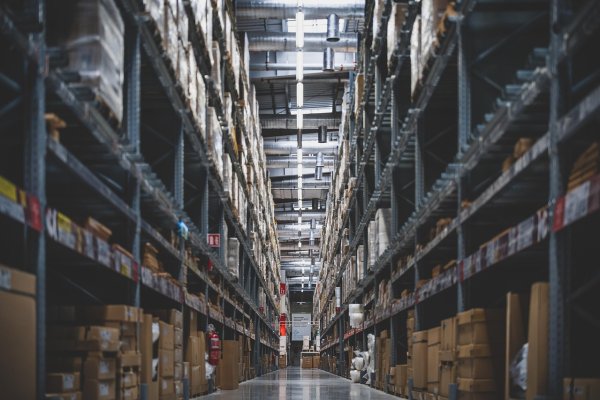
One of the most significant variables in 3PL pricing is racking storage efficiency. The type of racking system a warehouse uses directly impacts how much they charge for storing your inventory and how quickly they can process orders.
Understanding Racking Systems and Their Cost Implications
Modern warehouses employ various racking configurations, each with distinct cost profiles:
Selective Racking: The most common and accessible system, offering direct access to every pallet. While it provides excellent accessibility, it's less space-efficient, which can translate to higher per-pallet costs. However, for businesses requiring frequent access to diverse SKUs, this represents the best value despite higher square footage costs.
Drive-In/Drive-Through Racking: These high-density systems allow forklifts to drive directly into rack lanes, maximizing cubic space utilization. Warehouses with these systems can often offer lower storage rates for businesses with multiple pallets of the same SKU. The trade-off is reduced selectivity and potentially longer retrieval times.
Push-Back and Pallet Flow Systems: These semi-automated solutions offer middle-ground pricing between selective and high-density systems. They're ideal for businesses with moderate SKU velocity and can significantly reduce labor costs—savings that reputable 3PLs pass along to clients.
When comparing prices through platforms like www.search3pl.com, always ask about the warehouse's racking configuration. A facility with modern, efficient racking systems can offer genuinely low-cost storage without compromising service quality.
Maximizing Your Storage ROI
To get the most competitive pricing on racking storage:
- Palletize efficiently: Standard pallet sizes (48"x40") receive the best rates
- Consolidate shipments: Receiving full pallets costs less than individual cartons
- Forecast accurately: Commit to realistic space requirements to negotiate better rates
- Consider shared warehousing: Some 3PLs offer shared racking space at substantial discounts
- Negotiate based on volume: Even small businesses can leverage growth projections
Decoding the Biggest 3PL Companies: Size vs. Value
When conducting price comparisons, many businesses automatically gravitate toward the biggest 3PL companies, assuming that scale equals value. While major providers certainly have advantages, the relationship between company size and cost-effectiveness is more nuanced than most realize.
The Giants of the Industry
The largest 3PL companies—including DHL Supply Chain, XPO Logistics, C.H. Robinson, J.B. Hunt, and Kuehne + Nagel—collectively control a massive portion of the global logistics market. These industry titans offer:
- Extensive geographic coverage with hundreds of facilities worldwide
- Sophisticated technology platforms with advanced analytics
- Negotiated carrier rates that leverage tremendous shipping volume
- Financial stability and insurance coverage that provides peace of mind
- Specialized capabilities for complex supply chain challenges
When Bigger Isn't Always Better for Your Budget
However, bigger doesn't automatically mean more affordable. The largest 3PL companies often:
- Impose high minimum commitments that don't suit smaller businesses
- Maintain rigid pricing structures with limited flexibility
- Focus on enterprise clients, potentially deprioritizing smaller accounts
- Add corporate overhead costs that inflate pricing
- Require longer contract terms with substantial early termination penalties
Regional and mid-sized 3PLs frequently offer more competitive pricing for small to medium businesses, along with personalized service that the giants simply cannot match. A comprehensive price comparison strategy must evaluate providers across the size spectrum.
The SEO Connection: Finding Low-Cost Solutions Online
Here's an aspect of price comparison that most businesses overlook: SEO strategy directly impacts your ability to find the best 3PL pricing. The way 3PL companies optimize their online presence determines whether you'll even discover them during your search process.
How SEO Affects Your 3PL Search
When you search for "low cost 3PL" or "affordable warehouse storage," search engines return results based on SEO optimization, not necessarily actual cost competitiveness. This creates several challenges:
The Marketing Budget Paradox: Companies spending the most on SEO and appearing at the top of search results often have higher overhead costs—which get passed to clients. Meanwhile, operationally efficient providers with lower prices may lack visibility simply because they invest in warehouses and equipment rather than digital marketing.
Content vs. Value: A 3PL with extensive blog content, guides, and resources will rank higher than competitors, but this doesn't correlate with pricing competitiveness. The most search-visible provider might be 30-40% more expensive than a lesser-known alternative.
Strategic Searching for Genuine Price Comparison
To overcome SEO-induced blind spots in your price comparison:
- Use specialized directories: Platforms dedicated to 3PL comparison aggregate providers beyond those with the biggest marketing budgets
- Search long-tail terms: Instead of "3PL companies," try "regional 3PL Michigan automotive parts" for more targeted results
- Leverage industry associations: Organizations like IWLA maintain member directories that include smaller, cost-competitive providers
- Request referrals: Direct recommendations bypass SEO entirely and often lead to better pricing
- Compare beyond page one: Genuinely low-cost providers often appear on pages 2-3 of search results
Building Your Price Comparison Framework
Effective price comparison requires a systematic approach. Here's a framework that incorporates all the elements we've discussed:
Step 1: Define Your Requirements Precisely
Create a detailed profile of your needs including monthly storage requirements, order volume, average order complexity, special handling needs, and geographic preferences. Vague requirements lead to incomparable quotes.
Step 2: Cast a Wide Net
Request quotes from at least 8-10 providers across different size categories. Include some of the biggest 3PL companies, several regional providers, and a few specialized operations. Resources like www.search3pl.com can streamline this process by connecting you with multiple providers simultaneously.
Step 3: Standardize Your Quote Requests
Provide identical information to all providers using a standardized RFP template. Include specific scenarios like your average order (3 items from different locations), your busiest month's volume, and your storage footprint at peak season.
Step 4: Create an Apples-to-Apples Comparison Matrix
Build a spreadsheet that breaks down every cost component: receiving fees, storage (by cubic foot or pallet position), pick fees, pack fees, shipping costs, technology fees, and any minimums or commitments. Calculate your total monthly cost based on realistic projections, not best-case scenarios.
Step 5: Evaluate Beyond Price
While this article focuses on price comparison, remember that the cheapest option isn't always the best value. Consider:
- Location relative to your customer base (affects shipping speed and cost)
- Technology integration capabilities
- Track record and references
- Financial stability
- Scalability for your growth
- Customer service responsiveness
Negotiation Strategies for Maximum Savings
Once you've completed your price comparison, the real savings potential emerges through strategic negotiation. Armed with multiple quotes, you're in a powerful position.
Leverage competitive quotes: Let providers know you're evaluating multiple options without being aggressive. A simple "I've received quotes ranging from X to Y" often prompts improved pricing.
Negotiate contract length vs. pricing: Providers will offer better rates for longer commitments. If you're confident in a provider, a 24-month contract might reduce costs by 15-20% compared to month-to-month terms.
Bundle services: If you need both storage and value-added services like kitting or returns processing, bundle them in negotiations for better overall pricing.
Ask about growth incentives: Many 3PLs offer tiered pricing that automatically reduces rates as your volume increases. Ensure these thresholds are written into your contract.
The Bottom Line on Price Comparison
In an industry where margins are measured in pennies, effective price comparison for 3PL services can be the difference between sustainable growth and slow decline. By understanding the true costs beyond headline rates, recognizing how racking storage efficiency impacts pricing, evaluating both the biggest 3PL companies and smaller alternatives, and navigating the SEO landscape strategically, businesses can identify genuinely low-cost solutions that don't compromise quality.
The most successful companies don't simply accept the first quote they receive or assume that higher prices equal better service. They invest time in comprehensive comparison, ask detailed questions about cost structures, and negotiate aggressively based on market knowledge.
Remember: a 10% reduction in logistics costs directly translates to a 10% improvement in profit margins for most e-commerce businesses. Given that 3PL services typically represent 15-25% of product costs, the ROI on thorough price comparison is substantial and immediate. Take the time to compare properly, and the savings will compound year after year, providing your business with a sustainable competitive advantage in an increasingly crowded marketplace.