Top 10 Shocking Ways DHL & 3PLs Slash Costs Per Pallet

In today's hypercompetitive logistics landscape, every dollar counts. For businesses relying on third-party logistics (3PL) providers and global shipping giants like DHL, understanding how to reduce cost per pallet while maintaining efficiency has become the holy grail of supply chain management. The difference between thriving and merely surviving often comes down to mastering these cost-reduction strategies.
Whether you're a small e-commerce business or a multinational corporation, the strategies employed by industry leaders can transform your bottom line. Let's dive into the top 10 methods that are revolutionizing how smart companies approach their logistics costs.
1. Dynamic Space Optimization Through Vertical Storage Solutions
Leading 3PL providers have discovered that maximizing vertical space can reduce cost per pallet by up to 40%. Rather than spreading pallets across vast floor spaces, modern warehouses utilize high-density racking systems that reach ceiling heights of 40 feet or more.
DHL and other innovative logistics providers invest heavily in automated storage and retrieval systems (AS/RS) that make vertical storage not just possible, but highly efficient. This approach dramatically reduces the square footage required per pallet, translating directly to lower storage costs for clients.
Key Benefits of Vertical Optimization:
- Reduced warehouse rental costs per pallet stored
- Lower heating and cooling expenses due to smaller footprints
- Decreased labor costs through automation
- Improved inventory accessibility and tracking
2. Zone Skipping and Consolidated Shipping Networks
One of DHL's most effective cost-reduction strategies involves zone skipping, where shipments bypass intermediate distribution centers to reach final destinations more directly. This approach can reduce transportation costs by 15-30% while simultaneously improving delivery times.
By consolidating shipments from multiple clients heading to similar geographic regions, 3PLs achieve economies of scale that individual businesses could never attain independently. This collaborative approach to logistics creates win-win scenarios for all parties involved.
3. Predictive Analytics and Demand Forecasting
Modern 3PLs leverage artificial intelligence and machine learning to predict demand patterns with remarkable accuracy. This technological advancement allows for better space allocation, reducing wasted capacity and optimizing cost per pallet.
When warehouses can anticipate seasonal fluctuations, product launches, and inventory cycles, they can adjust staffing, equipment deployment, and space allocation accordingly. This proactive approach eliminates the costly reactive measures that traditionally plagued the industry.
4. Shared Warehousing and Multi-Client Facilities
The shared economy has transformed logistics just as it has transportation and accommodation. Leading 3PLs now operate multi-client facilities where businesses share warehouse infrastructure, equipment, and even labor resources.
This model distributes fixed costs across multiple clients, dramatically reducing the cost per pallet for each participant. Companies using www.search3pl.com to find such arrangements report savings of 25-50% compared to dedicated warehousing solutions.
Advantages of Shared Warehousing:
- Lower minimum volume requirements
- Flexible scaling without long-term commitments
- Access to premium locations at fraction of dedicated costs
- Shared technology and automation infrastructure
5. Cross-Docking to Eliminate Storage Costs
DHL has perfected the art of cross-docking, where products move directly from inbound to outbound transportation with minimal or no storage time. This strategy can eliminate up to 80% of traditional handling costs associated with palletized goods.
For fast-moving consumer goods and time-sensitive products, cross-docking represents the ultimate efficiency gain. Products spend hours rather than days in facilities, dramatically reducing the effective cost per pallet while accelerating time-to-market.
6. Standardized Pallet Sizing and Load Optimization
A surprisingly simple yet powerful cost-reduction strategy involves standardizing pallet dimensions and optimizing load configurations. Many businesses lose 10-20% of their transportation and storage efficiency simply through poor pallet utilization.
Industry-leading 3PLs employ sophisticated software that calculates optimal stacking patterns, weight distribution, and cube utilization. These systems ensure every inch of pallet and truck space generates maximum value.
7. Technology-Driven Labor Efficiency
Labor typically represents 50-70% of warehousing costs. DHL and progressive 3PLs have invested heavily in technologies that amplify human productivity without necessarily replacing workers.
Wearable devices, voice-picking systems, and augmented reality applications help warehouse workers complete tasks 30-50% faster with greater accuracy. When labor becomes more efficient, the cost per pallet processed decreases proportionally.
Efficiency-Boosting Technologies:
- Radio Frequency Identification (RFID) for instant inventory tracking
- Automated guided vehicles (AGVs) for pallet movement
- Warehouse management systems (WMS) with real-time optimization
- Mobile scanning devices for paperless operations
8. Strategic Network Design and Facility Placement
Geographic positioning dramatically impacts logistics costs. Sophisticated 3PLs use network optimization algorithms to determine ideal facility locations based on client shipping patterns, labor costs, real estate prices, and transportation infrastructure.
By strategically positioning warehouses near major transportation hubs or customer concentrations, providers like DHL reduce both inbound and outbound transportation costs. This geographic advantage can reduce overall cost per pallet by 15-25% compared to poorly positioned facilities.
9. Reverse Logistics and Returns Optimization
Returns represent a significant hidden cost in modern supply chains. Progressive 3PLs have developed specialized reverse logistics processes that minimize the cost impact of returned goods.
By consolidating returns, refurbishing products efficiently, and redistributing inventory through optimal channels, these providers turn what was once a cost center into a value-adding service. The effective cost per pallet decreases when facilities handle both forward and reverse flows efficiently.
10. Performance-Based Contracts and Continuous Improvement Programs
The final strategy involves aligning incentives between 3PLs and their clients through performance-based pricing models. Rather than fixed rates per pallet, innovative contracts tie costs to efficiency metrics, accuracy rates, and cost-reduction achievements.
DHL and leading providers implement continuous improvement methodologies borrowed from manufacturing—like Lean and Six Sigma—to systematically eliminate waste and reduce costs over time. These programs create sustainable competitive advantages that benefit both provider and client.
Implementing These Strategies in Your Business
Understanding these top 10 cost-reduction strategies is just the beginning. The real challenge lies in finding the right 3PL partner who actively employs these methods and can demonstrate measurable results.
When evaluating potential logistics partners, ask specific questions about their approaches to space optimization, technology implementation, and continuous improvement. Request case studies showing actual cost per pallet reductions achieved for clients in your industry.
Platforms like www.search3pl.com provide invaluable resources for comparing multiple providers, understanding pricing structures, and identifying which 3PLs specialize in the cost-reduction strategies most relevant to your business needs.
The Bottom Line on Cost Reduction
The logistics industry is experiencing unprecedented transformation driven by technology, data analytics, and innovative business models. Companies that once accepted high costs per pallet as unavoidable are now discovering that dramatic reductions are not only possible but essential for competitive survival.
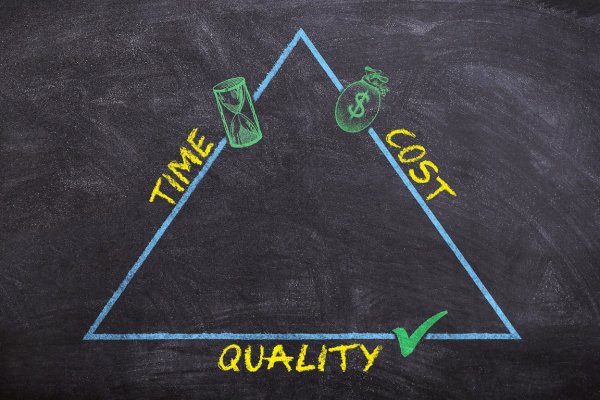
DHL and other industry leaders continue pushing boundaries, proving that efficiency and cost reduction aren't mutually exclusive with quality service. By adopting even a few of these ten strategies, businesses can achieve significant savings while often improving service levels simultaneously.
The key to success lies in partnering with forward-thinking 3PLs who view cost reduction as an ongoing journey rather than a one-time event. As supply chains grow increasingly complex, the providers who master these efficiency techniques will separate themselves from competitors still operating with yesterday's methodologies.
Whether you're shipping dozens or thousands of pallets monthly, these proven strategies offer pathways to improved profitability and competitive positioning. The question isn't whether you can afford to implement these approaches—it's whether you can afford not to.