
Your Business Is Bleeding Money Without 3PL Integration
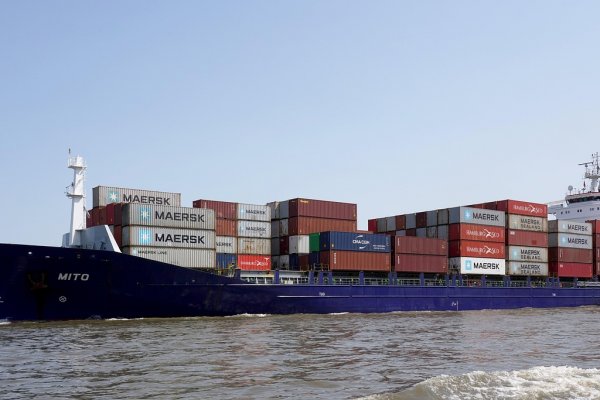
Every day, thousands of ecommerce businesses watch their profits evaporate through inefficient logistics, delayed shipments, and overwhelmed operations. The culprit? Attempting to manage complex supply chains without professional third-party logistics support. If you're running a WooCommerce store and still handling fulfilment in-house or relying solely on traditional carriers like Parcel Force, you're leaving substantial money on the table.
The Hidden Cost of DIY Fulfilment
When entrepreneurs launch their online stores, the excitement of those first orders often masks a brutal reality: fulfilment is expensive, time-consuming, and rarely your core competency. What begins as packing a few boxes in your spare room quickly escalates into a logistical nightmare consuming warehouse space, staff time, and mental bandwidth that should be focused on growing your business.
The numbers tell a sobering story. Small to medium-sized ecommerce businesses typically spend between 15-25% of their revenue on logistics operations. This includes warehousing, picking, packing, shipping, returns processing, and the inevitable mistakes that come with manual processes. Meanwhile, businesses leveraging professional 3PL providers often reduce these costs to 8-12% while simultaneously improving delivery speeds and customer satisfaction.
Understanding the 3PL Advantage in Modern Supply Chains
Third-party logistics providers have evolved far beyond simple warehousing and shipping services. Today's 3PLs function as strategic partners, offering integrated supply chain solutions that transform how products move from manufacturers to customers' doorsteps.
What Exactly Is a 3PL?
A 3PL, or third-party logistics provider, handles some or all of your supply chain operations on your behalf. This comprehensive approach includes:
- Inventory management – Real-time tracking of stock levels across multiple locations
- Warehousing – Secure storage with climate control and security monitoring
- Order fulfilment – Picking, packing, and preparing orders for shipment
- Shipping coordination – Negotiating with multiple hauliers and carriers for optimal rates
- Returns processing – Managing reverse logistics efficiently
- Technology integration – Seamless connection with ecommerce platforms like WooCommerce
The beauty of this model lies in specialization. While you focus on product development, marketing, and customer relationships, your 3PL partner concentrates exclusively on moving products efficiently through the supply chain.
Breaking Free from Parcel Force Limitations
Many UK-based ecommerce businesses default to Parcel Force for shipping, assuming the Royal Mail subsidiary offers the best combination of reliability and cost. However, this single-carrier dependency creates significant vulnerabilities in your supply chain.
The Single-Carrier Trap
Relying exclusively on Parcel Force or any single carrier means you're subject to their pricing structure, service limitations, and operational challenges. When strikes occur, prices increase, or service standards slip, you have no fallback position. Your customers experience delays, and your business absorbs the reputational damage.
Professional 3PLs maintain relationships with multiple hauliers and carriers, including Parcel Force, DHL, UPS, Hermes, DPD, and specialized regional carriers. This carrier-agnostic approach delivers several advantages:
- Competitive pricing through volume negotiations across multiple carriers
- Service redundancy ensuring shipments continue even during carrier-specific disruptions
- Optimal carrier selection for each shipment based on destination, size, and urgency
- Better service level agreements backed by carrier competition
Additionally, established 3PLs negotiate volume discounts that individual businesses could never achieve. A medium-sized ecommerce operation shipping 100 parcels daily pays significantly more per shipment than a 3PL moving 50,000 parcels daily across their entire client base.
WooCommerce Integration: The Technical Game-Changer
WooCommerce powers over 28% of all online stores globally, making it the world's most popular ecommerce platform. Yet many WooCommerce merchants fail to leverage the platform's powerful fulfilment integration capabilities, continuing to manage logistics through manual processes and spreadsheet chaos.
Seamless Automation Through API Integration
Modern 3PL providers offer sophisticated WooCommerce integration that automates your entire fulfilment workflow. When a customer completes a purchase on your store, the magic unfolds:
- Order details automatically transmit to your 3PL's warehouse management system
- Inventory allocation occurs instantly, reserving products for that specific order
- Picking instructions generate for warehouse staff with optimal routing through the facility
- Packing occurs according to your specified branding and presentation requirements
- The optimal carrier is selected based on destination and service requirements
- Tracking information automatically updates in WooCommerce
- Your customer receives automated shipping notifications with tracking links
- Your inventory counts update in real-time across all sales channels
This entire sequence occurs without human intervention, typically within 2-4 hours of order placement. The efficiency gains are transformational, particularly during peak seasons when order volumes surge.
Multi-Channel Inventory Synchronization
Most successful ecommerce businesses eventually expand beyond a single WooCommerce store, selling through Amazon, eBay, Etsy, and other marketplaces. Managing inventory across these channels becomes impossibly complex without centralized systems.
Quality 3PL providers offer unified inventory management that synchronizes stock levels across all your sales channels. When a product sells on Amazon, your WooCommerce store immediately reflects the reduced inventory, preventing overselling and the customer service nightmares that follow.
Haulier Relationships: The Hidden Infrastructure
Behind every successful 3PL operation lies a complex network of haulier relationships that most ecommerce businesses never see. These partnerships represent decades of relationship building, volume commitments, and operational integration that individual businesses cannot replicate.
The Haulier Hierarchy
Understanding the distinction between hauliers, carriers, and couriers clarifies how professional logistics networks function. Hauliers typically handle larger shipments and pallet loads between distribution centers. Carriers manage the mid-mile and last-mile delivery to end customers. Sophisticated 3PLs orchestrate both layers seamlessly.
For example, your inventory might arrive from manufacturers via haulier transport to the 3PL's distribution center. Individual customer orders then ship via parcel carriers optimized for residential delivery. This two-tier approach balances cost efficiency with delivery speed.
When you work directly with carriers like Parcel Force, you're limited to their service offerings and rate cards. A 3PL negotiates master service agreements with multiple hauliers, securing preferential pricing and service commitments based on aggregate volume across their entire client portfolio.
Building a Resilient Supply Chain in Uncertain Times
Recent years have demonstrated the fragility of global supply chains. Brexit complications, pandemic disruptions, driver shortages, and fuel price volatility have created unprecedented challenges for businesses managing their own logistics.
Professional 3PLs provide supply chain resilience through diversification and expertise. Their relationships with multiple hauliers and carriers mean they can quickly pivot when specific routes or services face disruption. Their scale allows them to secure capacity during peak periods when individual shippers find themselves frozen out.
Moreover, established 3PLs maintain contingency plans and alternative routing options that activate automatically when primary channels fail. This operational sophistication represents years of experience handling crisis situations across thousands of clients.
Calculating Your True 3PL ROI
The financial case for 3PL partnership extends well beyond simple per-order fulfilment fees. Comprehensive analysis reveals multiple cost savings:
- Eliminated warehouse overhead – No rent, utilities, insurance, or facility maintenance
- Reduced labor costs – No warehouse staff, benefits, or management overhead
- Lower shipping rates – Access to volume discounts across multiple carriers
- Decreased inventory carrying costs – Optimized stock levels through professional management
- Minimized losses – Reduced damage, theft, and obsolescence through proper handling
- Opportunity cost recovery – Redirecting management time toward revenue-generating activities
For businesses processing 500+ orders monthly, the break-even analysis typically favors 3PL partnership within the first quarter. Beyond 1,000 monthly orders, the cost advantages become overwhelming.
Choosing the Right 3PL Partner
Not all 3PL providers deliver equal value. The logistics industry spans from massive international corporations to specialized regional operators, each with distinct strengths and limitations. Finding the right match for your business requires careful evaluation.
Platforms like www.search3pl.com simplify this research process by offering comprehensive directories of 3PL providers worldwide, complete with service comparisons, pricing information, and customer reviews. This transparency allows informed decision-making rather than settling for the first provider encountered.
Essential Selection Criteria
When evaluating potential 3PL partners, prioritize these factors:
- WooCommerce integration capabilities – Seamless technical connection with your platform
- Geographic footprint – Warehouse locations aligned with your customer distribution
- Carrier relationships – Partnerships beyond just Parcel Force for optimal flexibility
- Scalability – Ability to handle your growth without service degradation
- Technology platform – Modern warehouse management systems with real-time visibility
- Specialization – Experience with your product categories and handling requirements
- Financial stability – Established operations unlikely to disrupt your business
The investment in thorough due diligence pays dividends through years of reliable partnership. Switching 3PL providers mid-stream creates significant operational disruption, making the initial selection crucial.
The Future of Ecommerce Logistics
Supply chain sophistication increasingly determines ecommerce success. Customer expectations for next-day delivery, real-time tracking, and hassle-free returns continue rising. Simultaneously, operational costs increase through wage inflation, fuel prices, and regulatory compliance requirements.
This squeeze between rising customer expectations and increasing costs makes professional 3PL partnership not merely advantageous but essential for sustainable growth. The businesses thriving in today's competitive ecommerce landscape recognize logistics as a strategic differentiator rather than a necessary evil.
Your WooCommerce store has unlimited growth potential, but only if your supply chain can scale alongside your ambitions. Whether you're shipping 50 orders monthly or 5,000, the right 3PL partner transforms logistics from a constraint into a competitive advantage.
The question isn't whether to partner with a 3PL provider, but rather how quickly you can implement this transformation. Every day operating with suboptimal logistics represents lost profit, frustrated customers, and missed growth opportunities. Resources like www.search3pl.com make finding the perfect logistics partner straightforward, removing the final barrier to operational excellence.
Stop bleeding money through inefficient fulfilment. Your business deserves a supply chain that accelerates growth rather than constraining it. The 3PL revolution is here – the only question is whether you'll lead or follow.


