
Warehouse Secrets That Could Make or Break Your Business
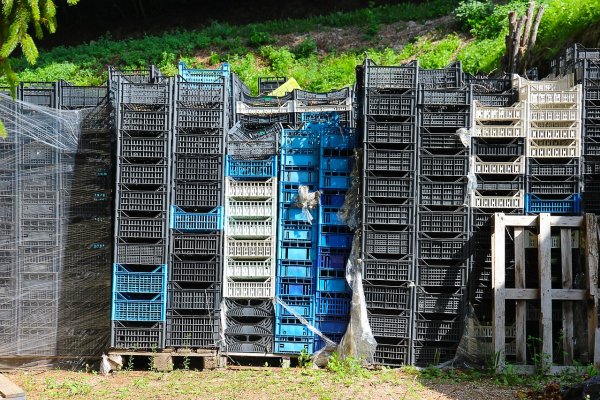
In today's hyper-competitive ecommerce landscape, the difference between thriving and merely surviving often comes down to what happens behind the scenes in your fulfilment warehouse. While customers focus on checkout experiences and product quality, savvy business owners understand that warehouse operations can dramatically impact their bottom line, customer satisfaction, and long-term growth potential.
The modern fulfilment warehouse has evolved far beyond simple storage facilities. Today's operations integrate sophisticated technology, strategic postage management, and streamlined processes that can process thousands of B2C orders daily with remarkable accuracy. Let's explore the critical components that separate exceptional fulfilment warehouses from their mediocre counterparts.
The Brain of Modern Warehousing: WMS Software
At the heart of every high-performing fulfilment warehouse lies a sophisticated Warehouse Management System (WMS) software. This technology acts as the central nervous system, coordinating every movement, transaction, and decision within the facility.
What WMS Software Actually Does
WMS software transforms chaotic warehouse environments into precision-tuned operations. Rather than relying on memory, paper records, or spreadsheets, modern warehouses utilize WMS platforms to track inventory in real-time, optimize storage locations, and direct workers along the most efficient paths.
The system monitors every item from the moment it arrives at the receiving dock until it ships to the end customer. When inventory arrives, WMS software automatically assigns optimal storage locations based on factors like product velocity, size, weight, and compatibility with neighboring items. This intelligent placement reduces travel time during the picking process and maximizes warehouse space utilization.
Real-Time Inventory Accuracy
One of the most valuable features of WMS software is its ability to maintain real-time inventory visibility. Every scan, movement, and transaction updates the system instantaneously, providing accurate stock levels across all sales channels. This eliminates the nightmare scenario of selling products that are actually out of stock, which damages customer relationships and brand reputation.
For businesses using platforms like www.search3pl.com to compare fulfilment providers, WMS capability should be a critical evaluation criterion. The sophistication of a provider's WMS often directly correlates with their operational efficiency and accuracy rates.
Data-Driven Decision Making
Beyond day-to-day operations, WMS software generates invaluable analytics that inform strategic decisions. The system tracks metrics such as:
- Order accuracy rates and error patterns
- Picking and packing speed by individual worker or shift
- Inventory turnover rates by product category
- Space utilization and storage efficiency
- Seasonal demand fluctuations and trending products
This data empowers warehouse managers to continuously optimize operations, identify training opportunities, and forecast future capacity needs. Companies that leverage these insights consistently outperform competitors who operate on intuition alone.
Postage Strategy: The Hidden Profit Center
While often viewed as a necessary expense, postage management represents one of the most significant opportunities for cost savings and competitive advantage in fulfilment operations. The difference between optimized and suboptimal postage strategies can amount to thousands or even millions of dollars annually.
Carrier Negotiation and Rate Shopping
Established fulfilment warehouses leverage their shipping volume to negotiate preferential rates with multiple carriers. Rather than defaulting to a single provider, sophisticated operations utilize software that automatically compares rates across carriers for each shipment, selecting the optimal balance of cost and delivery speed.
This carrier-agnostic approach ensures customers receive the best possible service while minimizing shipping expenses. For small to medium-sized businesses, partnering with a fulfilment provider who has already negotiated enterprise-level rates can deliver immediate cost savings compared to shipping independently.
Dimensional Weight Optimization
Modern postage costs frequently depend on dimensional weight rather than actual weight. This means that a lightweight but bulky package might cost significantly more to ship than a heavier but compact item. Smart fulfilment warehouses address this through:
- Custom packaging solutions tailored to specific product dimensions
- Multi-SKU order consolidation to reduce package count
- Strategic product bundling that minimizes wasted space
- Regular packaging audits to identify optimization opportunities
Zone Skipping and Regional Distribution
For businesses with sufficient volume, advanced postage strategies include zone skipping—consolidating packages headed to the same general region and transporting them in bulk before final carrier delivery. This approach can reduce costs by 10-30% on eligible shipments while often improving delivery times.
B2C Fulfilment: Meeting Consumer Expectations
The Business-to-Consumer (B2C) fulfilment landscape differs dramatically from B2B operations. Today's consumers have been conditioned by ecommerce giants to expect fast, accurate, and transparent order fulfilment—expectations that continue to escalate year over year.
The Amazon Effect on Customer Expectations
Whether fair or not, Amazon has fundamentally reshaped consumer expectations around shipping speed and convenience. Customers now expect two-day (or even same-day) delivery as standard rather than premium service. For fulfilment warehouses, this means:
- Processing orders within hours rather than days
- Offering multiple shipping speed options at checkout
- Providing real-time tracking information
- Ensuring packaging protects products during transit
- Creating unboxing experiences that reinforce brand value
Returns Management
B2C fulfilment isn't complete when the package leaves the warehouse. Reverse logistics—the process of handling returns—has become equally critical to customer satisfaction. Efficient fulfilment operations have streamlined returns processes that quickly inspect returned items, update inventory, and issue refunds or replacements.
The WMS software plays a crucial role here, tracking return reasons, identifying problematic products, and ensuring returned inventory is properly categorized (resellable, refurbishable, or damaged) to maximize recovery value.
Personalization and Brand Experience
Modern B2C fulfilment extends beyond simply getting products to customers. Many warehouses now offer value-added services like custom packaging, promotional inserts, gift wrapping, and personalized notes that transform a transaction into a memorable brand experience. These touches create emotional connections that drive customer loyalty and repeat purchases.
The Picking Bin Revolution: Small Change, Big Impact
Among the many operational elements within a fulfilment warehouse, the humble picking bin might seem inconsequential. Yet this simple tool represents a critical interface between workers and inventory that directly impacts speed, accuracy, and worker fatigue.
Ergonomics and Efficiency
Traditional picking processes required workers to carry completed orders or push cumbersome carts through the warehouse. Modern picking bins have evolved to optimize ergonomics and workflow. These specialized containers feature:
- Compartmentalization for multi-order batch picking
- Lightweight materials that reduce worker fatigue
- Integrated barcode scanning surfaces for verification
- Stackable designs that maximize space efficiency
- Color-coding systems that reduce picking errors
Batch Picking Strategies
Rather than completing orders individually (discrete picking), sophisticated warehouses employ batch picking strategies where a single worker collects items for multiple orders simultaneously. Specialized picking bins with divided compartments enable this approach, allowing one person to efficiently gather products for 5, 10, or even 20 orders in a single warehouse pass.
This dramatically reduces travel time—often the largest component of picking labor—while maintaining order accuracy through integrated verification systems within the WMS software.
Technology Integration
The latest generation of picking bins integrates with WMS software and pick-to-light systems. Some advanced facilities use bins with built-in displays showing which compartment corresponds to which order, or LED indicators that illuminate when the correct bin should receive an item. This technology-assisted picking virtually eliminates sorting errors and accelerates training for new warehouse staff.
Bringing It All Together: The Integrated Approach
The true power of modern fulfilment warehouses emerges when WMS software, postage optimization, B2C expertise, and efficient tools like picking bins work in concert. Each element amplifies the others, creating operational synergies that would be impossible to achieve in isolation.
For example, the WMS software might identify that three orders shipping to the same postal code could be consolidated into a single package, reducing postage costs. It then directs a worker using an optimized picking bin to collect all three orders' items in one trip. The system automatically generates the most cost-effective shipping label while scheduling pickup with the preferred carrier.
This seamless integration delivers multiple benefits simultaneously: reduced labor costs, lower postage expenses, faster order processing, and improved customer satisfaction through quicker delivery.
Choosing the Right Fulfilment Partner
For businesses evaluating whether to build internal fulfilment capabilities or partner with a third-party logistics provider, understanding these operational elements is crucial. The right fulfilment warehouse should demonstrate:
- Robust WMS software with real-time visibility and reporting
- Proven postage optimization strategies that reduce shipping costs
- Deep B2C expertise with fast order processing and returns management
- Modern equipment and processes including efficient picking systems
- Scalability to grow alongside your business
Platforms like www.search3pl.com enable businesses to compare multiple fulfilment providers across these critical dimensions, ensuring you find a partner whose capabilities align with your specific needs and growth objectives.
The Competitive Advantage
In an era where product differentiation becomes increasingly difficult and customer acquisition costs continue rising, operational excellence in fulfilment represents a sustainable competitive advantage. Businesses that master these warehouse fundamentals can offer faster shipping, lower prices, better customer experiences, and higher profit margins simultaneously—a combination that's difficult for competitors to match.
The warehouse might operate behind the scenes, but its impact resonates through every customer interaction and financial statement line item. Understanding and optimizing WMS software, postage strategies, B2C processes, and operational details like picking bins isn't just about logistics efficiency—it's about building a foundation for sustainable business growth in the digital commerce era.
Whether you're managing your own warehouse or evaluating fulfilment partners, these elements should form the core of your assessment criteria. The businesses that get warehousing right don't just survive in competitive markets—they thrive, turning logistics from a cost center into a genuine source of competitive differentiation and customer delight.


