
D2C Fulfilment: Royal Mail vs Amazon FBA Services Comparison
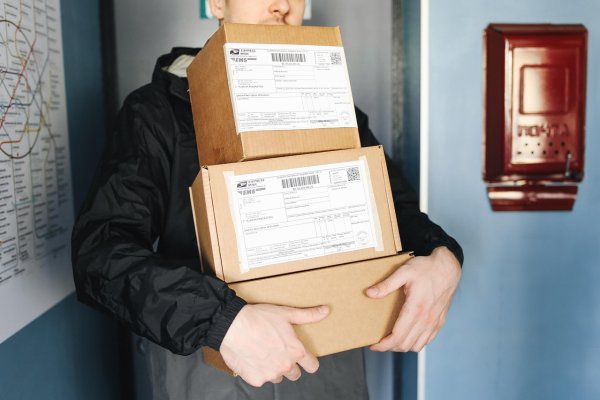
The landscape of ecommerce fulfilment has transformed dramatically over the past decade, with businesses facing an increasingly complex array of options for getting products into customers' hands. Whether you're a startup launching your first product line or an established brand expanding your distribution channels, choosing the right fulfilment strategy can make or break your business. Today, we'll explore three predominant approaches: traditional Royal Mail services, direct-to-consumer (D2C) fulfilment models, and Amazon's Fulfilment by Amazon (FBA) program.
Understanding the D2C Revolution
Direct-to-consumer fulfilment has fundamentally changed how brands interact with their customers. Rather than relying on retail intermediaries, D2C businesses ship products directly from warehouses or fulfilment centers to end consumers. This model provides unprecedented control over the customer experience, from packaging design to delivery speed, while also offering valuable data insights about purchasing behaviour.
The D2C model has exploded in popularity because it eliminates middlemen, allowing brands to maintain higher profit margins whilst building direct relationships with customers. Companies employing D2C strategies can gather first-party data, implement personalised marketing, and respond quickly to market demands. However, this approach also requires businesses to manage or outsource their entire logistics operation, including warehousing, inventory management, order processing, and shipping.
Key Advantages of D2C Fulfilment
- Brand control: Complete oversight of packaging, inserts, and customer communication
- Customer relationships: Direct access to customer data and feedback
- Margin preservation: Elimination of retailer markups
- Market agility: Faster response to trends and customer demands
- Customisation potential: Ability to offer personalised products and experiences
Royal Mail: The Traditional Shipping Foundation
Royal Mail remains a cornerstone of UK ecommerce shipping, offering a familiar and trusted service that consumers recognise and value. For many small to medium-sized businesses, Royal Mail provides an accessible entry point into ecommerce fulfilment without requiring sophisticated logistics infrastructure or long-term commitments.
The postal service offers various options suited to different business needs, from standard second-class mail for cost-conscious operations to tracked and signed services for valuable items. Royal Mail's extensive delivery network reaches every UK address, including remote locations that private couriers may charge premium rates to service.
Royal Mail Service Tiers
Understanding Royal Mail's service structure is essential for businesses planning their fulfilment strategy:
- 1st Class and 2nd Class: Basic letter and small parcel services with different speed guarantees
- Signed For: Services requiring recipient signature for added security
- Tracked 24 and Tracked 48: Parcels with online tracking capabilities
- Special Delivery Guaranteed: Premium next-day service with compensation for delays
- International Services: Various options for overseas delivery at different price points
Limitations of Royal Mail for Growing Businesses
While Royal Mail offers reliability and nationwide coverage, scaling businesses often encounter limitations. The manual process of preparing, labelling, and dropping off parcels becomes increasingly time-consuming as order volumes grow. Unlike integrated fulfilment solutions, Royal Mail doesn't provide warehousing, inventory management, or order processing services, meaning businesses must handle these functions separately.
Additionally, Royal Mail's pricing structure may become less competitive at higher volumes compared to business accounts with private couriers or integrated fulfilment solutions. Companies experiencing rapid growth often find themselves needing more sophisticated tracking, returns management, and customer service capabilities than standard postal services provide.
Amazon FBA: The Ecommerce Giant's Solution
Amazon's Fulfilment by Amazon program has revolutionised ecommerce logistics by opening the retail giant's sophisticated infrastructure to third-party sellers. With FBA, businesses send inventory to Amazon's warehouses, and Amazon handles storage, picking, packing, shipping, customer service, and returns for those products.
The appeal of FBA is immediately apparent: sellers gain access to Amazon Prime's two-day delivery promise, significantly boosting product visibility and conversion rates. Products fulfilled by Amazon typically rank higher in search results and win the coveted Buy Box more frequently, directly impacting sales velocity.
Benefits of Amazon FBA
FBA offers compelling advantages that have made it the fulfilment choice for hundreds of thousands of sellers worldwide:
- Prime eligibility: Products automatically qualify for Amazon Prime's fast, free shipping
- Scalability: Amazon's infrastructure handles volume spikes during peak seasons
- Multi-channel fulfilment: Option to fulfil orders from other sales channels using FBA inventory
- Customer trust: Amazon's reputation and customer service backing your products
- Global reach: Easy expansion into international markets through Amazon's global network
- Time savings: Complete outsourcing of logistics operations
The Hidden Costs and Considerations of FBA
Despite its advantages, FBA isn't universally suitable. The fee structure includes storage fees, fulfilment fees, and additional charges for long-term storage, oversized items, and special handling. These costs can erode profit margins, particularly for low-priced items or slow-moving inventory.
Perhaps more significantly, FBA sellers sacrifice direct customer relationships. Amazon owns the customer data, communications, and experience. Brands building long-term value through customer loyalty and repeat purchases may find this limitation problematic. Additionally, sellers compete on Amazon's marketplace alongside countless competitors, often in price-driven races to the bottom.
Inventory management with FBA requires careful planning. Products must be prepared according to Amazon's strict requirements, and inventory levels must balance storage fees against stockout risks. Seasonal businesses or those with unpredictable demand patterns may find FBA's storage fees particularly challenging.
Comparing Service Models: Which Suits Your Business?
Choosing between Royal Mail, D2C fulfilment, and Amazon FBA depends on multiple factors including business size, growth trajectory, product characteristics, and strategic priorities. Many successful businesses actually employ a hybrid approach, using different services for different purposes.
Royal Mail Works Best When:
- You're just starting out with limited order volumes
- You sell lightweight, low-value items with healthy margins
- You want to maintain complete control without long-term commitments
- Your business operates seasonally or irregularly
- You're testing product-market fit before scaling
D2C Fulfilment Makes Sense When:
- Building brand identity and customer relationships is paramount
- You require customised packaging or personalisation
- You sell through your own website and want to control the experience
- Order volumes justify partnering with a 3PL provider
- You need detailed customer data for marketing purposes
For businesses exploring D2C fulfilment options, platforms like www.search3pl.com offer comprehensive directories of third-party logistics providers, making it easier to compare services and find partners aligned with specific business needs.
Amazon FBA Is Ideal When:
- You sell primarily or exclusively on Amazon's marketplace
- Prime eligibility significantly impacts your sales
- You want to outsource all fulfilment operations quickly
- Your products have dimensions and margins compatible with FBA fees
- You're focused on sales velocity over customer relationship building
The Hybrid Approach: Best of All Worlds
Increasingly, successful ecommerce businesses employ sophisticated multi-channel strategies that leverage different fulfilment methods for different purposes. A brand might use Amazon FBA for products sold on Amazon, maintain D2C fulfilment through a third-party logistics partner for their Shopify store, and use Royal Mail for small, direct shipments or returns processing.
This approach maximises reach while maintaining strategic flexibility. It allows businesses to capture Amazon's massive customer base whilst building owned channels and direct customer relationships. The complexity requires robust inventory management systems and careful planning, but the potential rewards justify the additional operational overhead.
Technology Integration: The Critical Success Factor
Regardless of which fulfilment approach you choose, technology integration proves essential for efficient operations. Modern inventory management systems synchronise stock levels across multiple channels, preventing overselling whilst optimising inventory placement. Order management platforms consolidate orders from various sources, routing them to appropriate fulfilment methods based on predefined rules.
When evaluating fulfilment options, consider how easily each integrates with your existing technology stack. Services offering robust APIs, pre-built integrations with major ecommerce platforms, and real-time data synchronisation will save countless hours and prevent costly errors as your business scales.
Making Your Decision: Strategic Considerations
Your fulfilment strategy should align with your broader business objectives. Consider these questions when evaluating options:
- What's your primary sales channel? Amazon sellers naturally gravitate toward FBA, while brands selling through owned channels may prefer D2C solutions.
- How important is brand control? If brand experience is paramount, D2C fulfilment offers maximum control despite higher operational complexity.
- What are your volume projections? Royal Mail suits low volumes, but you'll need scalable solutions as you grow.
- What are your product characteristics? Size, weight, value, and fragility all impact the economics of different fulfilment methods.
- What's your customer acquisition strategy? If you're building long-term customer value through email marketing and loyalty programs, owning the customer relationship matters.
Resources like www.search3pl.com provide valuable tools for comparing different fulfilment services worldwide, helping businesses make informed decisions based on their specific requirements and constraints.
Conclusion: Your Fulfilment Journey
There's no universally correct answer to the Royal Mail versus D2C versus Amazon FBA question. Each service model offers distinct advantages suited to different business contexts. Many businesses begin with Royal Mail's simplicity, graduate to Amazon FBA for its scale and Prime benefits, and eventually incorporate dedicated D2C fulfilment to build owned customer channels and brand equity.
The most successful approach involves honestly assessing your current situation, understanding where you want to be in twelve to twenty-four months, and choosing fulfilment solutions that support that journey whilst remaining flexible enough to adapt as circumstances change. Whether you choose the familiarity of Royal Mail, the marketplace power of Amazon FBA, the brand control of D2C fulfilment, or a strategic combination, ensure your decision aligns with your unique business objectives and customer needs.


