
Comparing Fulfilment Services: Which is Right for You?
In today's competitive ecommerce landscape, choosing the right fulfilment strategy can make or break your business. Whether you're a startup testing product-market fit or an established brand scaling operations, understanding the differences between Royal Mail, direct-to-consumer (D2C) fulfilment, and Amazon's fulfilment services is crucial for optimizing costs, delivery times, and customer satisfaction.
This comprehensive guide explores the key features, advantages, and limitations of each fulfilment approach, helping you make informed decisions that align with your business goals and customer expectations.
Understanding Your Fulfilment Options
Before diving into specific services, it's essential to understand the three primary fulfilment models available to modern ecommerce businesses. Each approach offers distinct advantages depending on your business size, product type, sales channels, and growth trajectory.
Royal Mail: The Traditional Carrier Approach
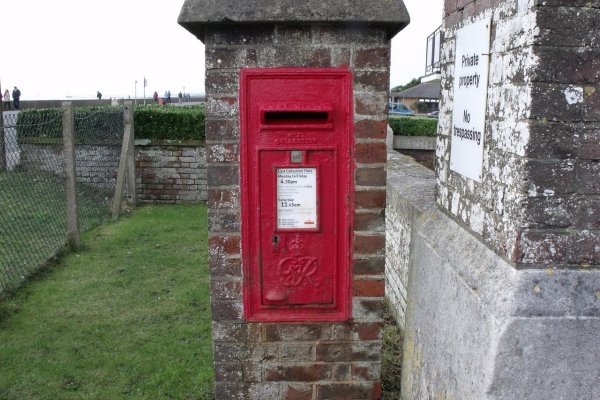
Royal Mail remains one of the most accessible shipping solutions for UK-based businesses, particularly for those just starting their ecommerce journey. This traditional carrier approach involves businesses handling their own storage, picking, packing, and then handing parcels to Royal Mail for delivery.
Key advantages of using Royal Mail include:
- Low barrier to entry with no minimum volume requirements
- Familiar and trusted brand recognition among UK consumers
- Extensive delivery network covering every UK postcode
- Competitive pricing for lightweight parcels and letters
- Multiple service tiers from standard to tracked and signed-for options
- Business account benefits including collection services and discounted rates
However, Royal Mail also presents certain limitations. Businesses must handle all warehousing and fulfilment operations internally, which requires space, staff, and operational expertise. As order volumes grow, this self-fulfilment model can become increasingly challenging to manage efficiently.
Direct-to-Consumer (D2C) Fulfilment
D2C fulfilment represents a more sophisticated approach where businesses partner with third-party logistics providers (3PLs) to handle storage, inventory management, order processing, and shipping. This model allows brands to maintain control over their customer experience while outsourcing the operational complexities.
D2C fulfilment works particularly well for businesses that want to build direct relationships with customers across multiple sales channels, including their own website, social media platforms, and marketplaces, while maintaining consistent branding throughout the delivery experience.
Benefits of D2C fulfilment include:
- Scalability without infrastructure investment
- Professional warehousing with inventory management systems
- Carrier flexibility to optimize costs across multiple shipping providers
- Custom packaging and branded unboxing experiences
- Technology integration with ecommerce platforms
- Geographic distribution options for faster delivery times
Amazon FBA (Fulfillment by Amazon)
Amazon's Fulfillment by Amazon (FBA) program offers sellers access to Amazon's vast logistics network. Sellers send inventory to Amazon's fulfilment centers, and Amazon handles storage, picking, packing, shipping, customer service, and returns for orders placed through the Amazon marketplace.
For businesses selling primarily on Amazon, FBA provides significant competitive advantages, including Prime eligibility, which can dramatically increase conversion rates and product visibility.
Detailed Service Comparison
Cost Structures and Pricing Models
Understanding the cost implications of each fulfilment method is critical for maintaining healthy profit margins. Each service presents a different pricing structure that impacts your bottom line differently depending on your product characteristics and sales volume.
Royal Mail operates on a straightforward pay-per-shipment model. Costs are based primarily on package weight, size, and service level. While this provides predictability, you must factor in hidden costs like packaging materials, staff time, storage space, and potential shipping errors that occur with manual processing.
D2C fulfilment providers typically charge a combination of storage fees (based on space or pallet positions), pick-and-pack fees per order, and shipping costs. Many providers at www.search3pl.com offer tiered pricing that becomes more favorable as your volume increases, making this model particularly attractive for growing businesses.
Amazon FBA charges monthly storage fees, fulfilment fees per unit, and additional charges for services like labeling, removal, or long-term storage. FBA costs can be higher than alternatives, but the increased sales velocity from Prime eligibility often justifies the expense for marketplace-focused sellers.
Delivery Speed and Customer Experience
Modern consumers expect fast, reliable delivery with real-time tracking. How each fulfilment option performs in this critical area significantly impacts customer satisfaction and repeat purchase rates.
Royal Mail offers various speed options from economy (2-3 days) to next-day services. However, delivery times depend entirely on when you dispatch parcels. If you're fulfilling orders manually, same-day dispatch becomes challenging during high-volume periods, effectively adding a day to total delivery time.
D2C fulfilment partners can often achieve same-day dispatch with cutoff times in the late afternoon or evening. Professional 3PLs maintain relationships with multiple carriers, allowing them to select the most efficient service for each delivery destination. Geographic distribution through multiple fulfilment centers can further reduce delivery times by positioning inventory closer to customers.
Amazon FBA excels in delivery speed, particularly for Prime members who expect free one or two-day delivery. Amazon's sophisticated logistics network and predictive inventory placement algorithms ensure fast delivery across most regions. However, this speed advantage applies only to Amazon marketplace orders, not your other sales channels.
Scalability and Flexibility
Your fulfilment solution should grow with your business without requiring complete operational overhauls during peak seasons or expansion phases.
Using Royal Mail for self-fulfilment offers flexibility in the sense that you control every aspect of the process, but scalability becomes problematic. Seasonal peaks require hiring temporary staff, securing additional space, and managing increased complexity—all while maintaining accuracy and speed.
D2C fulfilment provides excellent scalability. Professional 3PLs maintain capacity buffers and experienced workforce to handle volume fluctuations. They can also support multi-channel selling strategies, integrating with your Shopify store, eBay listings, and other platforms simultaneously, with all inventory managed from a single pool.
Amazon FBA scales effortlessly for Amazon sales but creates challenges for businesses selling across multiple channels. Multi-channel fulfilment through FBA is possible but often less cost-effective than channel-specific solutions.
Best Practices for Choosing Your Fulfilment Strategy
Assess Your Current Stage and Goals
Your ideal fulfilment solution depends heavily on where your business stands today and where you aim to be in the coming years. Startups testing product-market fit might begin with self-fulfilment through Royal Mail to minimize fixed costs while maintaining maximum flexibility. This approach allows you to understand your fulfilment operations intimately before outsourcing.
Growing businesses experiencing consistent order volumes above 20-50 daily orders typically reach an inflection point where D2C fulfilment becomes more economical and efficient than self-fulfilment. At this stage, the time and energy saved by outsourcing fulfilment can be redirected toward marketing, product development, and customer relationships.
Established brands with significant Amazon presence should seriously evaluate FBA despite higher costs, as Prime eligibility often increases conversion rates enough to offset the premium pricing.
Calculate Total Landed Cost
Don't focus solely on obvious costs like shipping rates. Calculate the total landed cost including labor, rent, utilities, packaging materials, shipping supplies, equipment, software, errors and returns processing, and opportunity cost of your time.
Many business owners discover that what appears to be a £3 Royal Mail shipping cost actually costs £8-10 when all factors are included. This comprehensive calculation often reveals that professional fulfilment services deliver better value than surface-level comparisons suggest.
Prioritize Technology Integration
Seamless technology integration prevents the operational headaches that plague businesses using disconnected systems. Your fulfilment solution should integrate effortlessly with your ecommerce platform, automatically transmitting orders, updating inventory levels, and providing tracking information to customers.
When evaluating D2C fulfilment providers, prioritize those offering robust API connections or native integrations with your sales channels. Amazon FBA provides excellent integration within the Amazon ecosystem but limited connectivity elsewhere.
Consider a Hybrid Approach
Many successful ecommerce businesses don't rely on a single fulfilment method. A hybrid strategy might involve using Amazon FBA for marketplace sales while partnering with a D2C fulfilment provider for your website orders. This approach optimizes the strengths of each channel while maintaining flexibility.
Some businesses use Royal Mail for low-value, lightweight items while routing larger or more complex orders through specialized 3PL partners. The key is matching each order type with the most appropriate fulfilment method based on your specific requirements.
Test Before Committing
Before fully transitioning to a new fulfilment model, conduct thorough testing. Send sample orders, evaluate packaging quality, assess delivery times, and experience the customer service firsthand. Many 3PL providers listed on platforms like www.search3pl.com offer trial periods or pilot programs that allow you to validate their service quality before signing long-term contracts.
Making Your Decision
Choosing between Royal Mail, D2C fulfilment, and Amazon FBA isn't about finding the objectively "best" option—it's about identifying the best solution for your specific business context. Consider your primary sales channels, average order values, product characteristics, growth trajectory, and strategic priorities.
Choose Royal Mail and self-fulfilment if:
- You're processing fewer than 20 orders daily
- Your products are lightweight and simple to pack
- You have available space and time for fulfilment operations
- You want maximum control over every aspect of the process
Choose D2C fulfilment if:
- You're scaling beyond your self-fulfilment capacity
- You sell across multiple channels and need unified inventory
- You want to offer branded packaging and unboxing experiences
- You prefer to focus on marketing and product development rather than operations
Choose Amazon FBA if:
- Amazon represents your primary or exclusive sales channel
- Your products compete in categories where Prime eligibility is essential
- You're willing to accept higher fulfilment costs for increased visibility and conversion
- You want to leverage Amazon's customer service infrastructure
Conclusion
The fulfilment landscape offers more options than ever before, each with distinct advantages for different business models and growth stages. By understanding the nuances of Royal Mail's carrier services, D2C fulfilment partnerships, and Amazon's FBA program, you can make strategic decisions that optimize both customer satisfaction and profitability.
Remember that your fulfilment strategy isn't permanent. As your business evolves, your logistics approach should adapt accordingly. Regularly reassess your fulfilment costs, service quality, and strategic alignment to ensure your chosen solution continues supporting your business objectives effectively.
The right fulfilment partner becomes an extension of your brand, directly impacting customer perceptions and repeat purchase likelihood. Invest the time to evaluate your options thoroughly, and don't hesitate to seek expert guidance when navigating these critical operational decisions.


