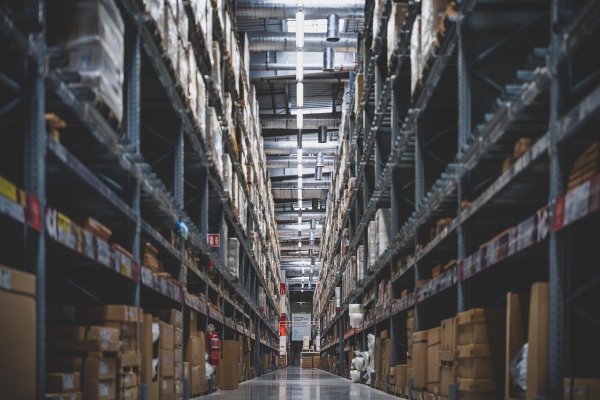
Your Warehouse Search Could Make or Break Your Business
Finding a new warehouse is one of the most consequential decisions any growing business will face. The right facility can propel your operations forward, streamline efficiency, and position you for exponential growth. The wrong choice? It can drain resources, frustrate customers, and create bottlenecks that strangle your business potential. In today's hyper-competitive marketplace, where same-day delivery is becoming standard and customer expectations soar higher each year, your warehouse selection carries enormous weight.
This comprehensive guide explores the critical factors you must consider when searching for a new warehouse facility, with particular focus on transportation infrastructure, palletisation strategies, Magento integration capabilities, and automation technologies that separate exceptional warehouses from mediocre ones.
The Transportation Imperative: Location Still Reigns Supreme
The old real estate adage—location, location, location—applies doubly to warehouse selection. However, it's not just about being close to your customers anymore. Modern warehouse transportation requirements have evolved into a complex calculus involving multiple variables.
Proximity to Major Transportation Arteries
Your new warehouse must offer seamless access to major highways, ports, rail terminals, and airports depending on your distribution model. Consider these transportation factors:
- Highway access: Direct interstate connectivity reduces drayage costs and delivery times
- Port proximity: Essential for businesses importing containers or shipping internationally
- Rail accessibility: Critical for bulk goods and long-haul freight economics
- Airport distance: Increasingly important for expedited shipping and high-value goods
- Last-mile efficiency: Urban proximity versus lower costs in suburban/rural locations
Transportation costs typically represent 50-60% of total logistics expenses. A warehouse positioned just ten miles closer to major routes can translate into thousands of dollars saved monthly in fuel, driver time, and vehicle wear. When evaluating potential facilities, map out your actual distribution patterns. Where do most orders ship? What are your inbound receiving patterns? Use this data to calculate the true transportation cost of each location option.
Carrier Relationships and Service Availability
Beyond physical location, investigate which carriers service each potential warehouse area. Some facilities benefit from competitive carrier markets with multiple LTL and parcel options, while others may face limited choices that increase costs. The best warehouse locations attract numerous carriers, creating competitive pricing and service flexibility.
Palletisation: The Foundation of Warehouse Efficiency
Palletisation strategy might seem mundane, but it fundamentally determines how much inventory you can store and how efficiently you can move it. When touring potential warehouses, assess their palletisation capabilities with a critical eye.
Ceiling Height and Vertical Storage Capacity
Modern warehouses feature ceiling heights of 32 feet or more, allowing for vertical palletisation that maximizes cubic storage capacity. A facility with 24-foot ceilings versus 36-foot ceilings can mean a 40% difference in storage capacity using the same floor space. Consider:
- Clear height for pallet racking systems
- Sprinkler and HVAC placement that doesn't limit usable height
- Floor load capacity for heavy palletised goods
- Aisle width requirements for your material handling equipment
Racking Systems and Palletisation Infrastructure
Evaluate whether the warehouse includes existing racking or if you'll need to install your own. Professional-grade selective racking, drive-in racking, push-back systems, or pallet flow racks each serve different palletisation needs. The right system depends on your SKU velocity, inventory rotation requirements, and picking patterns.
Advanced palletisation strategies now incorporate slotting optimization software that positions fast-moving SKUs in easily accessible locations while utilizing higher positions for slower inventory. When comparing warehouses, consider how their physical layout supports intelligent palletisation strategies.
Magento Integration: The E-Commerce Warehouse Connection
For businesses operating on Magento platforms, warehouse selection takes on additional technical dimensions. Your warehouse isn't just a storage facility—it's a critical node in your digital commerce ecosystem.
Technology Infrastructure Requirements
Modern Magento operations require warehouses equipped with robust technology infrastructure. When evaluating facilities, investigate:
- Internet connectivity: Redundant high-speed connections supporting real-time inventory synchronization
- Power reliability: Backup generators ensuring systems remain operational during outages
- Wi-Fi coverage: Comprehensive wireless networks supporting mobile scanning devices
- Server environment: Climate-controlled spaces for on-premise systems if required
WMS and Magento Integration Capabilities
The warehouse management system (WMS) must integrate seamlessly with your Magento storefront. This integration enables:
- Real-time inventory accuracy: Automatic updates as products receive, pick, pack, and ship
- Order routing automation: Orders flow directly from Magento to warehouse picking queues
- Tracking synchronization: Shipping updates automatically post to customer accounts
- Returns processing: Reverse logistics feed inventory availability in real-time
If you're working with a third-party logistics provider, platforms like www.search3pl.com can help identify warehouses with proven Magento integration experience. The technical capability to connect systems isn't enough—you need a warehouse team that understands e-commerce fulfillment rhythms, peak season demands, and the customer experience implications of inventory accuracy.
Scalability for Magento Growth
Magento stores often experience rapid growth and seasonal volatility. Your warehouse must accommodate this elasticity. Look for facilities offering:
- Flexible space expansion options
- Scalable labor models that ramp up during peak seasons
- Technology systems that handle volume surges without degradation
- Multi-channel fulfillment capabilities as you expand beyond Magento
Automation: The Future Is Already Here
Warehouse automation has evolved from a luxury for enterprise operations to an expectation for competitive fulfillment. When searching for your new warehouse, automation capabilities should feature prominently in your evaluation criteria.
Levels of Warehouse Automation
Automation exists on a spectrum from basic mechanization to fully autonomous facilities. Understanding where your business falls on this spectrum helps identify appropriate warehouse options:
Basic automation: Conveyor systems, automated label printing, barcode scanning, and pick-to-light systems represent entry-level automation that dramatically improves accuracy and speed compared to fully manual operations.
Intermediate automation: Automated storage and retrieval systems (AS/RS), goods-to-person picking stations, automated sorting systems, and robotic palletizers deliver significant labor savings and throughput improvements.
Advanced automation: Autonomous mobile robots (AMRs), automated guided vehicles (AGVs), robotic picking arms, and AI-driven inventory optimization represent cutting-edge capabilities that few warehouses currently offer but increasingly more are adopting.
Automation ROI Considerations
When evaluating automated warehouses, look beyond the impressive technology to understand the return on investment. Automation delivers value through:
- Labor cost reduction: Fewer workers required for equivalent throughput
- Accuracy improvement: Reduced error rates mean fewer returns and customer service issues
- Speed enhancement: Faster order processing enables same-day and next-day delivery promises
- Safety improvements: Automation handles dangerous or repetitive tasks, reducing workplace injuries
- Space optimization: Automated systems often utilize space more efficiently than manual operations
However, automation also carries costs: higher facility rates, technology learning curves, maintenance requirements, and reduced flexibility for handling non-standard products. Your warehouse search should balance automation benefits against these considerations based on your specific operation.
Future-Proofing Your Warehouse Selection
Technology evolves rapidly. A warehouse that seems cutting-edge today might feel outdated in five years. When comparing facilities, assess their automation roadmap. Progressive warehouse operators continuously invest in emerging technologies and upgrade systems regularly. Ask potential partners about their technology investment plans and how they stay current with logistics innovations.
Making Your Final Warehouse Selection
Finding the right warehouse requires balancing numerous factors. Create a weighted scoring system that reflects your business priorities across these dimensions:
- Transportation accessibility and cost efficiency
- Palletisation capacity and storage optimization
- Magento integration capabilities and technical infrastructure
- Automation level and technology sophistication
- Scalability and flexibility for growth
- Cost structure and contract terms
- Partner expertise and operational track record
Don't rush this decision. Visit multiple facilities, speak with current clients, and test integration capabilities before committing. The right warehouse becomes a genuine competitive advantage, while the wrong choice creates headaches that compound over time.
Leveraging Expert Guidance in Your Search
The complexity of modern warehouse selection means few businesses possess all the expertise needed to evaluate every factor comprehensively. Specialized platforms that compare warehouse providers across multiple dimensions can significantly streamline your search process. Resources like www.search3pl.com offer comparative insights into warehouse capabilities, specializations, and service levels that would take months to research independently.
Whether you're scaling a Magento store, expanding into new markets, or simply outgrowing your current facility, approach your warehouse search with the strategic importance it deserves. The decision you make today will shape your operational capabilities, customer satisfaction levels, and competitive positioning for years to come. Invest the time to find a facility that doesn't just meet your current needs but positions you for the future you're building.
Your warehouse is more than a building—it's the physical manifestation of your promise to customers. Choose wisely, and it becomes the engine powering your growth. Choose poorly, and it becomes the anchor limiting your potential. The stakes couldn't be higher.